

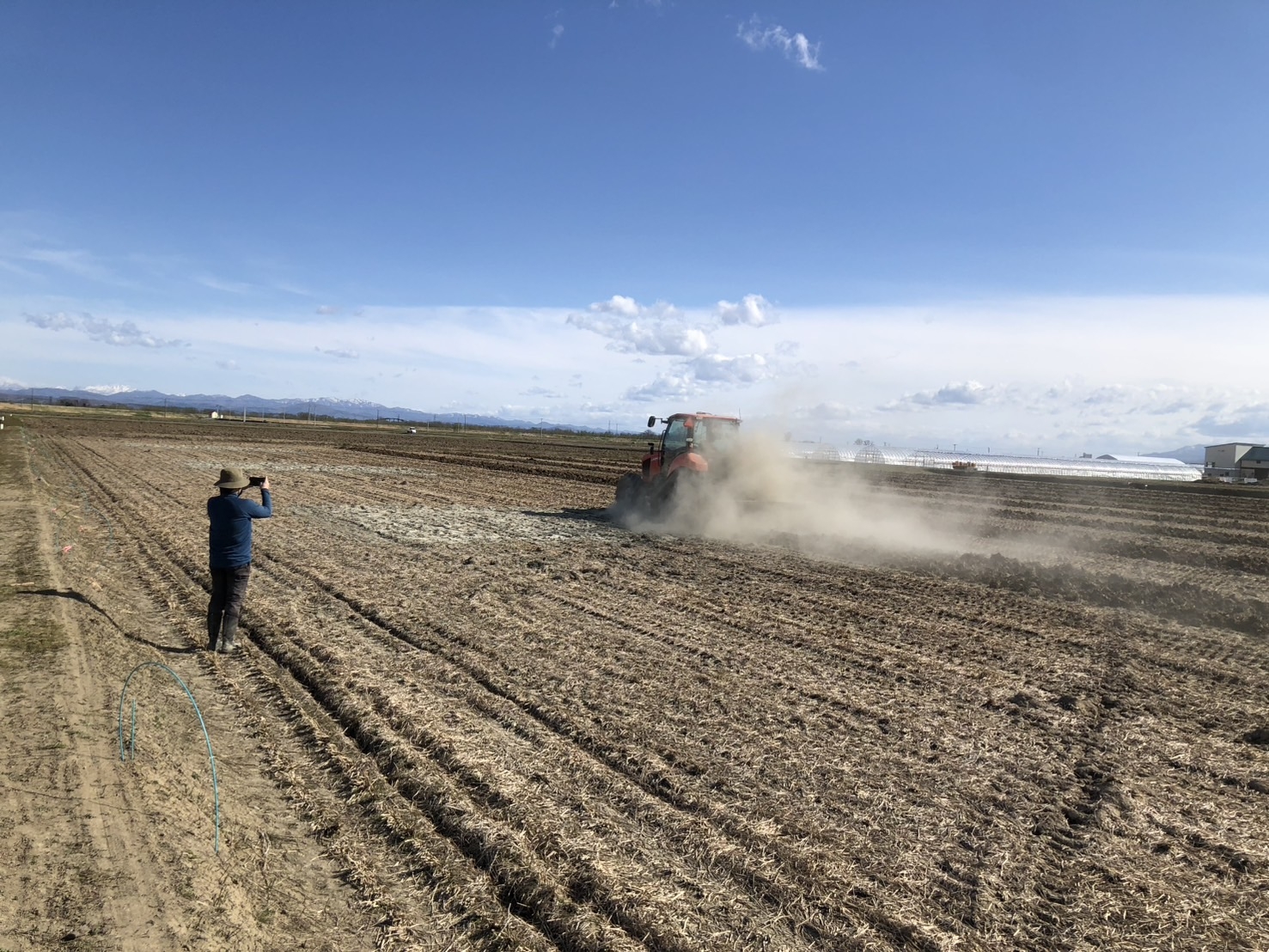
In agricultural land applications, highly weatherable rocks such as basalt are crushed, spread onto farmland, and incorporated into the cultivated soil layer through tillage.
The following benefits are expected from applying these materials to agricultural land:
1. Reduction of Carbon Dioxide Emissions
A portion of the carbon dioxide that would otherwise be released from the soil into the atmosphere is expected to react with silicate minerals contained in the rock, forming bicarbonate ions and other dissolved inorganic carbon species. These products are then leached by rainfall and transported into aquatic environments, where the carbon can be stored over the long term.
2. Correction of Soil Acidity
The weathering of basalt also has an acid-neutralizing effect. Correction of soil acidity in agricultural fields can improve crop growth and may also reduce emissions of nitrous oxide (N₂O), one of the major greenhouse gases.
3. Agricultural Soil Regeneration
The mineral balance of agricultural soils has declined as a result of the long-term use of chemical fertilizers. Application of basalt can replenish minerals lost from farmland and contribute to the restoration and regeneration of soil health.